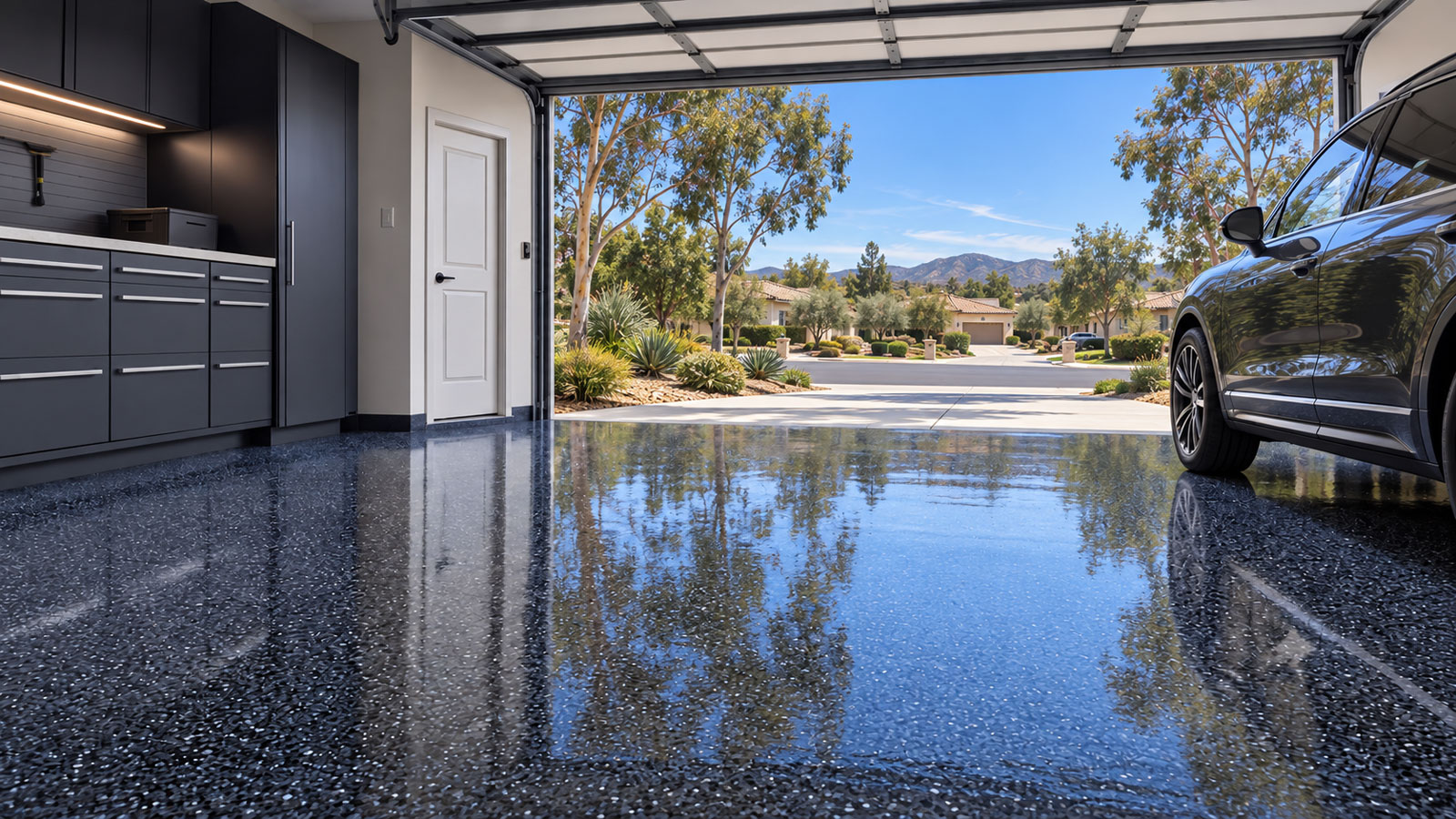
Garage Floor Coating in Seaside, CA
Floor Coating Services in Seaside, CA
Seaside’s housing history is unusually useful when thinking about garage floors. Seaside developed primarily as a single-family community in the 1950s and 1960s, with housing demand strongly connected to nearby Fort Ord. That means many local homes are old enough for their garage slabs to have decades of tire traffic, patching, paint, oil exposure, or previous DIY coatings.
At the same time, Seaside is not frozen in that era. Fort Ord’s closure, university growth, infill, and redevelopment have changed the city, so a garage may sit on a postwar slab, a later addition, or much newer concrete. The practical lesson is to identify the slab’s actual history rather than guessing from the age of the neighborhood.
For 2020–2024, the median value of owner-occupied housing in Seaside was about $787,100. For homeowners protecting a substantial asset, preparation is the part of the coating project that deserves the closest attention.
Local Market Insight
Seaside’s strong 1950s–60s housing legacy makes old paint, repairs, and previous surface treatments especially worth checking before a new coating goes down.
What Affects the Cost of Garage Floor Coating in Seaside?
Garage floor coating typically runs $6–$12 per square foot, with a typical two-car garage around $3,000–$5,500. In Seaside, slab age and the amount of removal or repair can be major drivers of the final scope.
Old paint or DIY epoxy
Decades of homeownership can leave multiple layers that must be removed if they are not sound.
Cracks and previous patches
Old patch compounds should be checked for adhesion before they are buried under a new system.
Mixed-age concrete
Additions or garage changes can create two slabs with different surface behavior.
Coastal moisture
Slow-drying corners, water at the door, or damp storage areas deserve inspection.
Grinding and dust control
Mechanical surface preparation is often the labor-heavy part of an older-floor project.
Traction needs
Wet tires and coastal dampness may make a modest traction additive worth discussing.
Call for a clear, project-specific estimate — or request one online.
Seaside slab history matters
A 1950s or 1960s garage may have been used very differently over its life: family parking, workshop, storage room, home gym, or even a partially finished space. Each use can leave coatings, adhesives, stains, or repair materials that affect the next system.
The presence of a crack is less important than what the crack is doing. Stable hairline cracking is different from movement at a joint or a repair that has broken loose. A good estimate should identify what gets filled, what remains a working joint, and what cannot be promised to disappear forever.
Nearer the coast, moisture and tracked-in grit can also influence finish choice. A very smooth finish may look attractive, but cleanability and traction should be balanced for the homeowner’s actual use.
Fort Ord Shaped Seaside’s Postwar Garage Stock
Fort Ord’s wartime expansion changed Seaside quickly. After 1941, the base grew into a major West Coast Army training facility, and Seaside was the nearest off-base community for many workers and military families. Much of the city’s single-family growth followed in the 1950s and 1960s.
For garage floors, that makes postwar construction a meaningful local pattern. A garage from that era may have original or heavily used concrete, but later additions, conversions, or repairs can create newer sections within the same space.
Former Fort Ord land is also still being redeveloped. The Campus Town plan alone covers roughly 122 acres of former base property and proposes up to 1,485 housing units. Seaside therefore continues to combine older postwar neighborhoods with much newer construction, so the coating decision should follow the slab’s actual age and surface history rather than a citywide assumption.
Practical homeowner check
Look for:
- paint lines from an old garage conversion;
- patched utility trenches;
- cracks that cross earlier patch material;
- tire wear or oil saturation;
- damp corners or a wet threshold;
- storage systems that may limit edge preparation.
Seaside Garage Floor Coating FAQs
Are older Seaside garage slabs still good candidates for coatings?
Often yes. Age alone is not the deciding factor. The important questions are structural condition, contamination, moisture, previous finishes, and whether the slab can be mechanically prepared to a sound surface.
What if my garage floor was painted years ago?
Tell the contractor before the estimate. Old paint or coating usually needs to be tested and often removed so the new system is not relying on weak material underneath.
Does a 1950s or 1960s home automatically mean the garage slab is that old?
No. Garages can be rebuilt, expanded, or re-poured. House age is a clue, not proof of slab age.
What should I compare between Seaside coating bids?
Compare the preparation method, crack-repair scope, coating layers, topcoat, traction, return-to-service expectations, and warranty—not only the quoted price.
Seaside Neighborhoods & Local Context
Phone Quote Line
Speak with a floor coating specialist about your project and get a realistic estimate range.
(831) 777-3877Typical Project Cost
$3,000–$5,500
Typical range for a two-car garage. Final pricing depends on floor size, concrete condition, prep work, coating type, and finish options.
Helpful Guides